
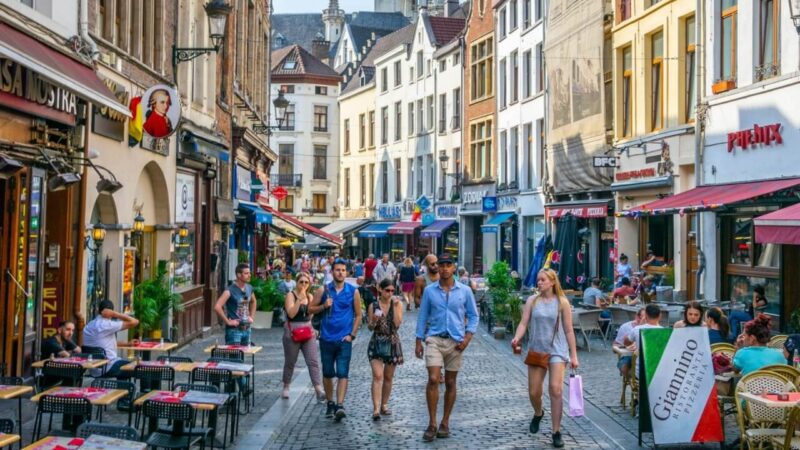
Brussels has a habit of surprising first-time visitors. Behind its grand European institutions lies a compact, wonderfully walkable city filled with medieval squares, lively neighbourhoods, chocolate shops and cafés where an afternoon can disappear surprisingly quickly.
Two days in Brussels are enough to experience the highlights of its historic city centre without rushing. You can explore the spectacular Grand-Place, admire centuries-old architecture, discover Belgian surrealism and spend your evenings enjoying the city’s food and beer culture.
The secret is keeping your itinerary concentrated around the centre. Most major attractions are within walking distance, leaving plenty of time for spontaneous discoveries along the way.
Day 1: Discover the Historic Heart of Brussels
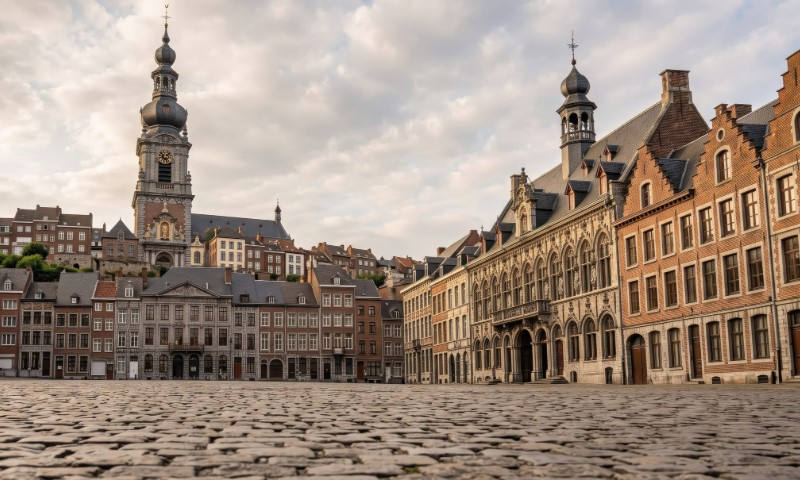
Your first day is all about the lower town, where Brussels developed from a medieval trading settlement into one of Europe’s most important commercial centres.
Morning: Start at Grand-Place
Begin at Grand-Place, the city’s magnificent central square and an obvious starting point for any first visit.
Surrounded by elaborate guildhouses, the Gothic Town Hall and the King’s House, the square has been a UNESCO World Heritage Site since 1998.
Its appearance tells a remarkable story. In 1695, French troops under Louis XIV bombarded Brussels, destroying much of the square. The wealthy merchant guilds rebuilt their headquarters in the following years, creating the extraordinary architectural ensemble visitors admire today.
Spend at least 30 minutes exploring the square. Look closely at the gilded decorations above the guildhouses, each reflecting the prosperity and identity of the trades once represented there.
For a closer look at local history, visit the Brussels City Museum inside the King’s House. Its collections explore the city’s development and include the original Manneken Pis statue.
Late Morning: Galeries Royales Saint-Hubert and Manneken Pis
View this post on Instagram
A short walk from Grand-Place brings you to the Galeries Royales Saint-Hubert, one of Europe’s earliest covered shopping arcades.
Opened in 1847, the elegant galleries feature vaulted glass ceilings, decorative stonework and boutiques selling Belgian chocolates and luxury goods.
The galleries also attracted literary figures. Victor Hugo and Alexandre Dumas were among the writers who frequented the fashionable complex during the nineteenth century, according to the city’s official tourism guide.
After exploring the galleries, return towards Grand-Place and follow Rue de l’Étuve to Manneken Pis. The compact layout of the historic centre makes walking between attractions particularly convenient. Travellers based at La Bourse Hotel in the city center can explore the surrounding streets without relying heavily on public transport.
The famous bronze figure is surprisingly small, a detail that often produces amused reactions from visitors expecting something considerably grander.
Its appeal comes from the city’s playful traditions. Manneken Pis regularly appears dressed in elaborate costumes celebrating cultural events, international friendships and local festivities.
Afternoon: Explore the Bourse and Sainte-Catherine
After lunch, wander west towards the Bourse, Brussels’ former stock exchange.
The impressive nineteenth-century building has been transformed into a public attraction, housing the Belgian Beer World Experience and other visitor facilities.
From here, continue along Rue Antoine Dansaert towards Sainte-Catherine.
The neighbourhood feels distinctly different from the streets surrounding Grand-Place. Independent boutiques, relaxed cafés and restaurants occupy buildings with a variety of architectural styles.
Sainte-Catherine also has an interesting maritime connection. The surrounding streets once formed part of Brussels’ historic port and fish-market district. Its seafood restaurants preserve something of that heritage.
Evening: Experience Brussels After Dark
Spend your first evening around Sainte-Catherine or the nearby Dansaert district.
Both offer excellent dining opportunities, ranging from traditional Belgian cooking to contemporary international restaurants.
A classic Belgian dinner might feature moules-frites (mussels with fries), carbonnade flamande (beef stew cooked with beer) or shrimp croquettes.
Afterwards, find a comfortable bar and sample a Belgian beer. Brussels is particularly associated with lambic and gueuze, traditional beers known for their distinctive fermentation methods and complex flavours.
For a memorable finish, return to Grand-Place after dark. The illuminated guildhouses give the square a completely different atmosphere.
Day 2: Art, Royal Architecture and the Sablon District
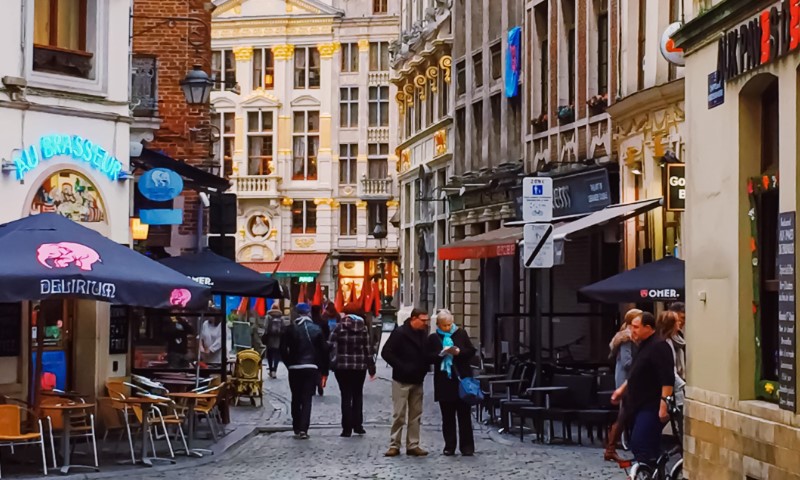
Your second day focuses on the upper town, where impressive cultural institutions, elegant squares and historic churches occupy the higher ground overlooking central Brussels.
Morning: Mont des Arts and the Royal Quarter
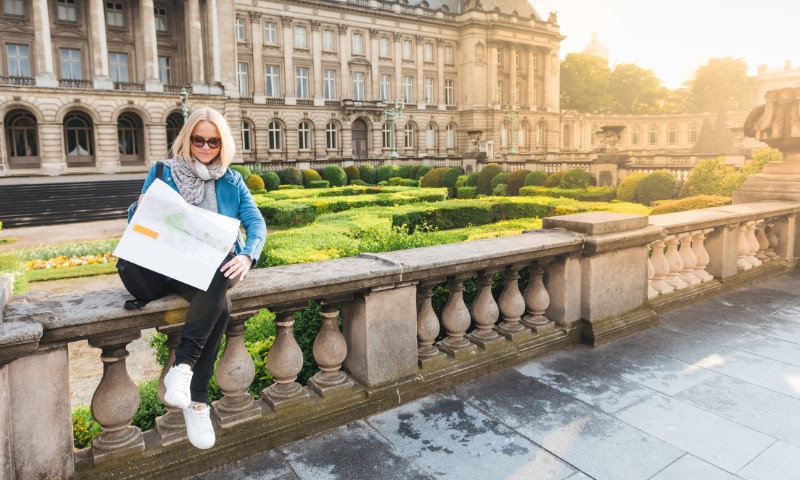
Start at Mont des Arts, one of the best viewpoints in central Brussels.
The formal gardens create a striking foreground for views across the lower city, with the tower of Brussels Town Hall rising above the rooftops.
The gardens were originally developed for the 1910 Universal Exhibition and later redesigned as part of the surrounding cultural complex.
Continue uphill towards Place Royale, where the atmosphere shifts towards neoclassical architecture.
Nearby attractions include the Royal Museums of Fine Arts of Belgium and the impressive Church of Saint Jacques-sur-Coudenberg.
The area reveals another side of Brussels, with broad streets and monumental buildings replacing the narrow medieval lanes of the historic centre.
Late Morning: Visit the Magritte Museum
Brussels has a particularly strong connection with surrealism, making the Magritte Museum an excellent cultural stop.
Dedicated to Belgian artist René Magritte, the museum houses an extensive collection of paintings, drawings and archival material.
Magritte’s work often features ordinary objects placed in unexpected situations. Floating apples, mysterious figures in bowler hats and dreamlike landscapes invite visitors to question familiar images.
The museum is located near Place Royale, making it convenient to combine with your morning walk.
According to Brussels Museums’ visitor information, regular opening hours are Tuesday through Friday, 10 a.m. to 5 p.m., and weekends, 11 a.m. to 6 p.m. The museum is generally closed on Mondays.
Allow approximately 90 minutes for your visit, depending on your interest in art.
Afternoon: Explore the Grand Sablon
A pleasant walk from the museum leads to the Sablon district, known for antique shops, art galleries and some of Brussels’ finest chocolatiers.
The Grand Sablon square offers an attractive setting for lunch or coffee, particularly when outdoor terraces are open.
Nearby stands the Church of Our Blessed Lady of the Sablon, an impressive Gothic building with beautiful stained-glass windows.
On weekends, the square hosts an antiques market, where visitors can browse jewellery, decorative objects and vintage collectibles.
Take time to explore the surrounding streets. The area has a quieter, more polished atmosphere than the busy historic centre, making it ideal for an unhurried afternoon.
For a final treat, visit a chocolatier and sample Belgian pralines. A small box also makes an excellent souvenir, assuming it survives the journey home.
Where to Stay for 48 Hours in Brussels
Location makes an enormous difference during a short visit.
The best accommodation options for first-time visitors are concentrated around Grand-Place, Brussels-Central railway station and Sainte-Catherine.
| Area | Best For | Main Advantage |
| Grand-Place | First-time visitors | Major landmarks within walking distance |
| Brussels-Central | Short stays and train arrivals | Convenient rail connections |
| Sainte-Catherine | Food lovers and evening outings | Excellent restaurants and cafés |
| Sablon | Couples and quieter stays | Elegant streets and cultural attractions |
For maximum convenience, choose accommodation within approximately 10 to 15 minutes’ walk of Grand-Place.
Staying centrally reduces transport time and allows you to return to your hotel between sightseeing and dinner.
Practical Tips for Your First Brussels City Break
A little planning makes exploring Brussels considerably easier.
- Arriving by plane: Direct trains connect Brussels Airport with Brussels-Central in approximately 18 minutes, according to Brussels Airport. Check current ticket prices before travelling.
- Getting around: Walking is the most convenient option for the suggested itinerary. Comfortable shoes are useful, particularly around the cobblestoned centre and the uphill route towards Place Royale.
- Museum visits: Check opening days before finalising your schedule. Many museums close on Mondays.
- Sightseeing passes: The Brussels Card may offer savings if you plan to visit several paid museums. A walking-focused itinerary with only one museum visit may work out cheaper with individual tickets.
- Dining: Reserve dinner ahead of time for popular restaurants, particularly on Friday and Saturday evenings.
Brussels weather can change quickly, so carrying a compact umbrella is sensible. Fortunately, its historic cafés and covered galleries provide attractive places to escape an unexpected shower.
Is 48 Hours Enough to Enjoy Brussels?
Absolutely. Two full days provide enough time to appreciate Brussels’ historic centre, explore several distinctive neighbourhoods and experience the city’s cultural and culinary traditions.
The itinerary also leaves room for one of the pleasures of European city breaks: finding an appealing café, ordering something delicious and watching the city go about its business.
Brussels rewards curiosity. Follow an unfamiliar cobbled street, admire an unexpected architectural detail or spend an extra half-hour in a square that catches your attention.
With 48 hours in the Belgian capital, there is plenty of opportunity for memorable discoveries.